About EVCostPerMile
Every electric car running cost, worked out by an actual owner.
Hi, I'm Sam
I'm a dad of two from West Yorkshire who works in digital marketing, and I'm into tech, gaming and saving money wherever I can. I built EVCostPerMile because friends, family and colleagues kept asking me the same questions: what's an electric car actually like to live with, what does it cost to charge, which tariff am I on, and what about servicing?
My first EV was a Mercedes EQC on a lease I found through Leasing.com. It was good value, and I quickly fell for how much cheaper electricity was than petrol. The savings meant I could afford a nicer car than I'd ever have run on petrol.
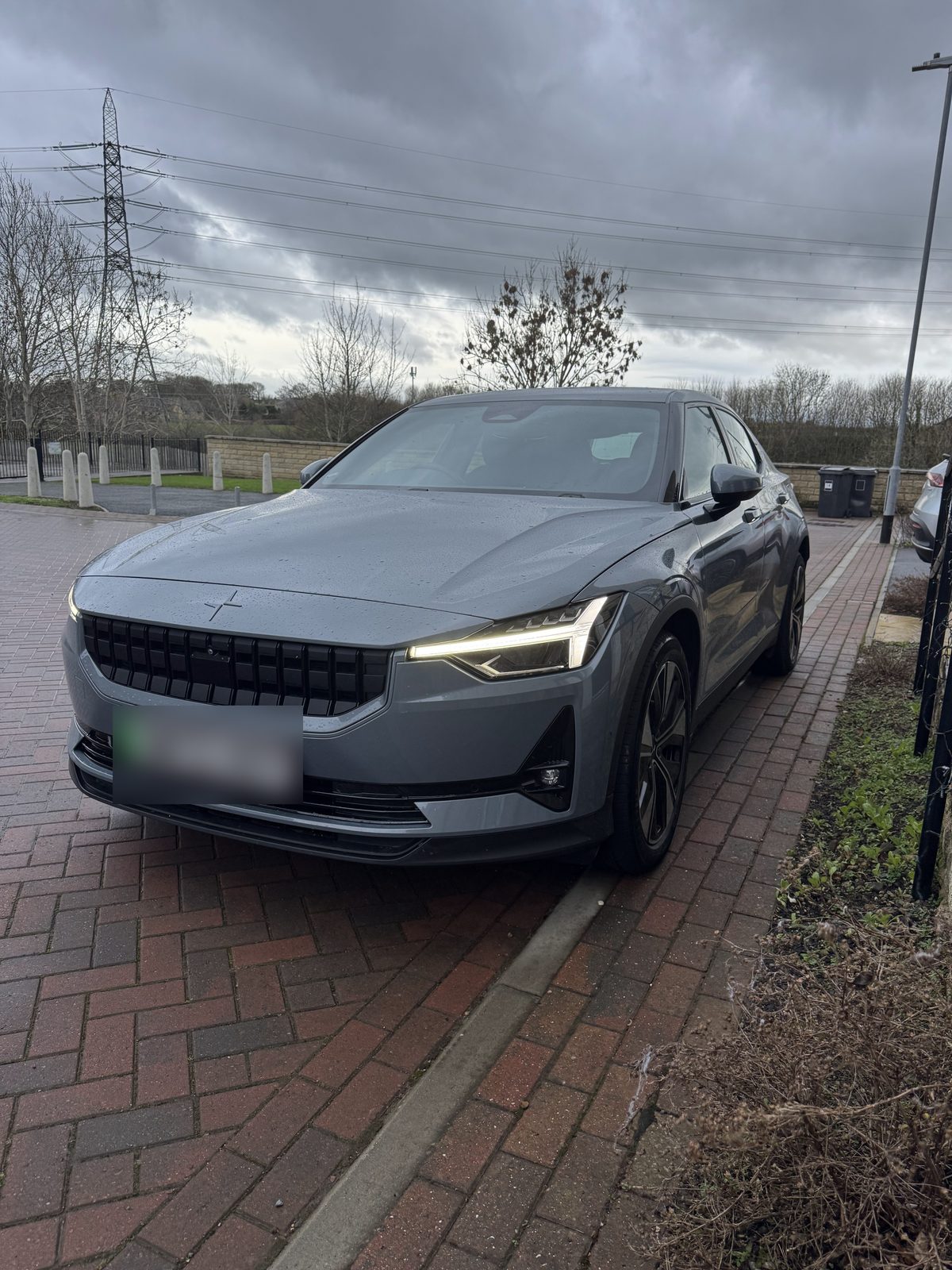
Then my mileage changed. I took the lease when I was doing about 5,000 miles a year on a local job. Soon after, I started a job in Manchester, my mileage shot up, and I ended up paying for excess miles. That's what pushed me to buy a used EV instead: a 2023 Polestar 2 Long Range, about three years old and still under warranty, with roughly 300 miles of range. I can drive as far as I like, and once the last interest-free payment is made it's mine to keep running.
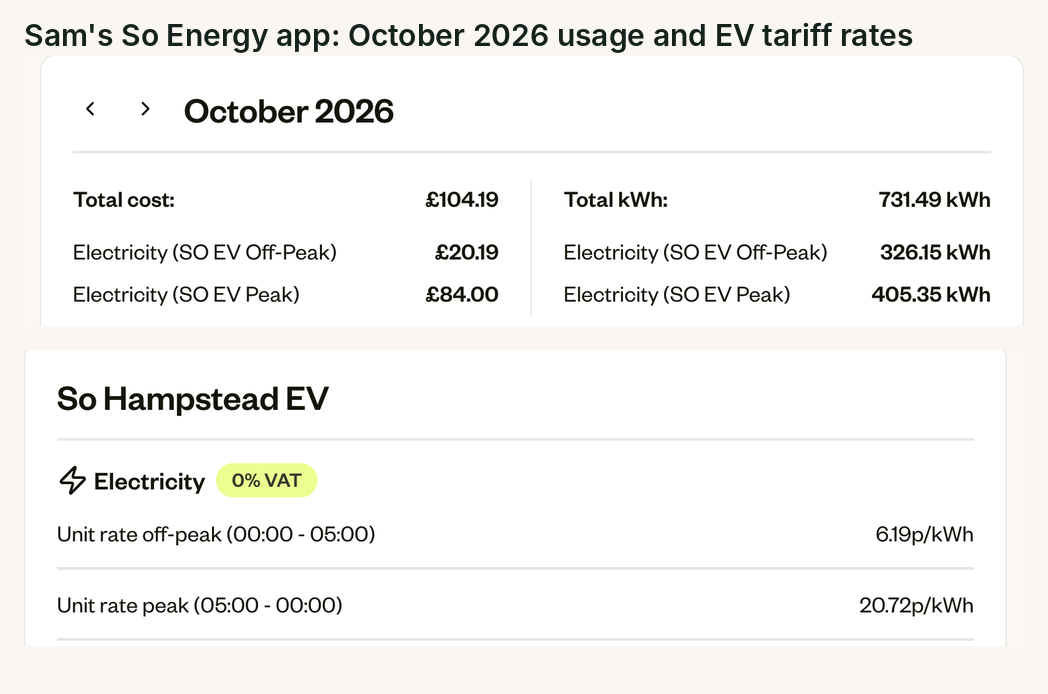
Running costs have been tiny. I charge at home overnight on an EV tariff (6.19p per kWh between midnight and 5am on So Energy's EV tariff, moving to EDF GoElectric at 6.66p when my fixed deal ends in late November 2026). The Polestar and my Pod Point charger let me schedule charging for the cheap window, midnight to 5am, which I couldn't do with the Mercedes; I used to have to plug in at 11pm and pay full price for anything outside the cheap hours. In a year with the Polestar my only maintenance bill has been an MOT and service for about £137, booked through Book My Garage with BMP Motors in Birstall, after my local garage couldn't tell me whether they could service an EV. Compare that with genuine Mercedes parts and alloy repairs on the EQC.
My real numbers
Here's my So Energy app for October 2026. Off-peak electricity (midnight to 5am) came to 326 kWh for £20.19, and all of it is the Polestar charging. At the Polestar 2's typical efficiency that's roughly 1,150 miles of driving, or about 1.7p a mile. The peak units are the rest of the house during the day.
I haven't needed a public charger yet. Every trip so far, including the Lake District, has been within the car's range on a round trip, so I leave home full every morning. Public rapid charging is for the odd long trip, and I budget for it as a one-off.
The real test is coming: I'm about to switch my wife to an electric car too. If the numbers on this site convince her, they should work for you.
Why the numbers matter
More than a quarter of new cars sold in the UK this year are fully electric, but most people still assume EVs cost more to run than they do. Petrol and diesel prices keep creeping up, while charging at home on the right tariff costs a fraction of the price, even after the 3p-a-mile pay-per-mile tax arrives in April 2028. This site is my attempt to put all the costs in one place, honestly, so you can check the sums for your own car.
How the calculator works
Electricity used. We divide your annual mileage by your car's efficiency (miles per kWh), then add 10% for energy lost while charging.
Where you charge. That electricity is split between home and public charging based on your answer. Public charging is priced at a typical rapid-charger rate, which you can change.
Your saving. We price your home charging on your current tariff and on each EV tariff. The difference is your saving. It covers car charging only: EV tariffs usually have higher daytime rates, so always check the supplier's whole-home quote.
Pay-per-mile tax. From April 2028 we add the government's confirmed Electric Vehicle Excise Duty of 3p per mile for battery electric cars.
Where our data comes from
Car efficiency figures are typical real-world estimates for each version of each model, not official WLTP figures, which are usually optimistic. Your own results will vary with weather, speed, tyres and driving style, so you can override the figure with your car's trip computer reading.
Tariff rates and fuel prices come from suppliers' published rates, the Ofgem price cap and UK pump price surveys. We check them every week, cross-check each figure against at least two sources, and show the date they were last checked. Rates can vary by region, so always confirm the live rate for your postcode before switching.
How we make money
The calculator and guides are free. Some links to energy suppliers, comparison services, leasing and servicing sites and home charger companies are affiliate links: if you click one and switch, buy or book, we may earn a commission. This never changes the price you pay. I only recommend companies I've used myself or would happily use, and I say so when I have.
Commission never affects the results. Tariffs are always ranked by what they would cost you, and the headline recommendation is the cheapest tariff that works with any EV, whether or not we earn from it. The site may also show clearly labelled adverts.
Contact
Spotted a wrong figure, or your car or tariff is missing? Email [email protected] and I'll update it.
Get told when EV prices change
Free email alerts when EV tariffs or the price cap change. Sign up.